SustainaPass Functionality
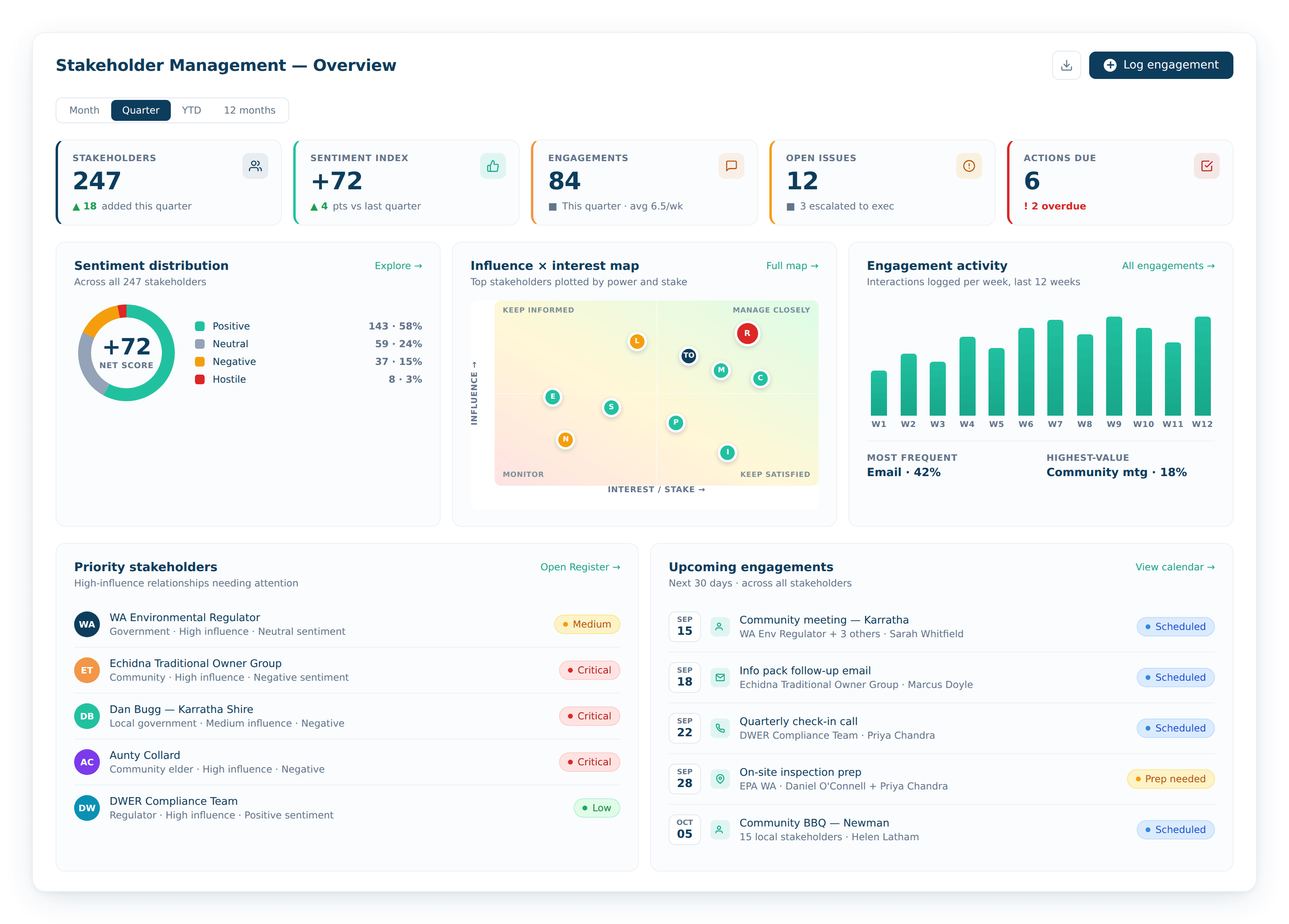
Stakeholders
How Do Organisations manage Stakeholders?
Stakeholder management is the process of identifying, aligning, and communicating with individuals or groups that have a vested interest in your business or project. It is used to minimize risks, prevent costly delays, secure vital resources, and build trust for smoother project execution
Common Use Cases
- Registering Stakeholders
- Categorising and assessing Stakeholders
- Managing obligations to Stakeholders
- Registering issues or concerns from Stakeholders
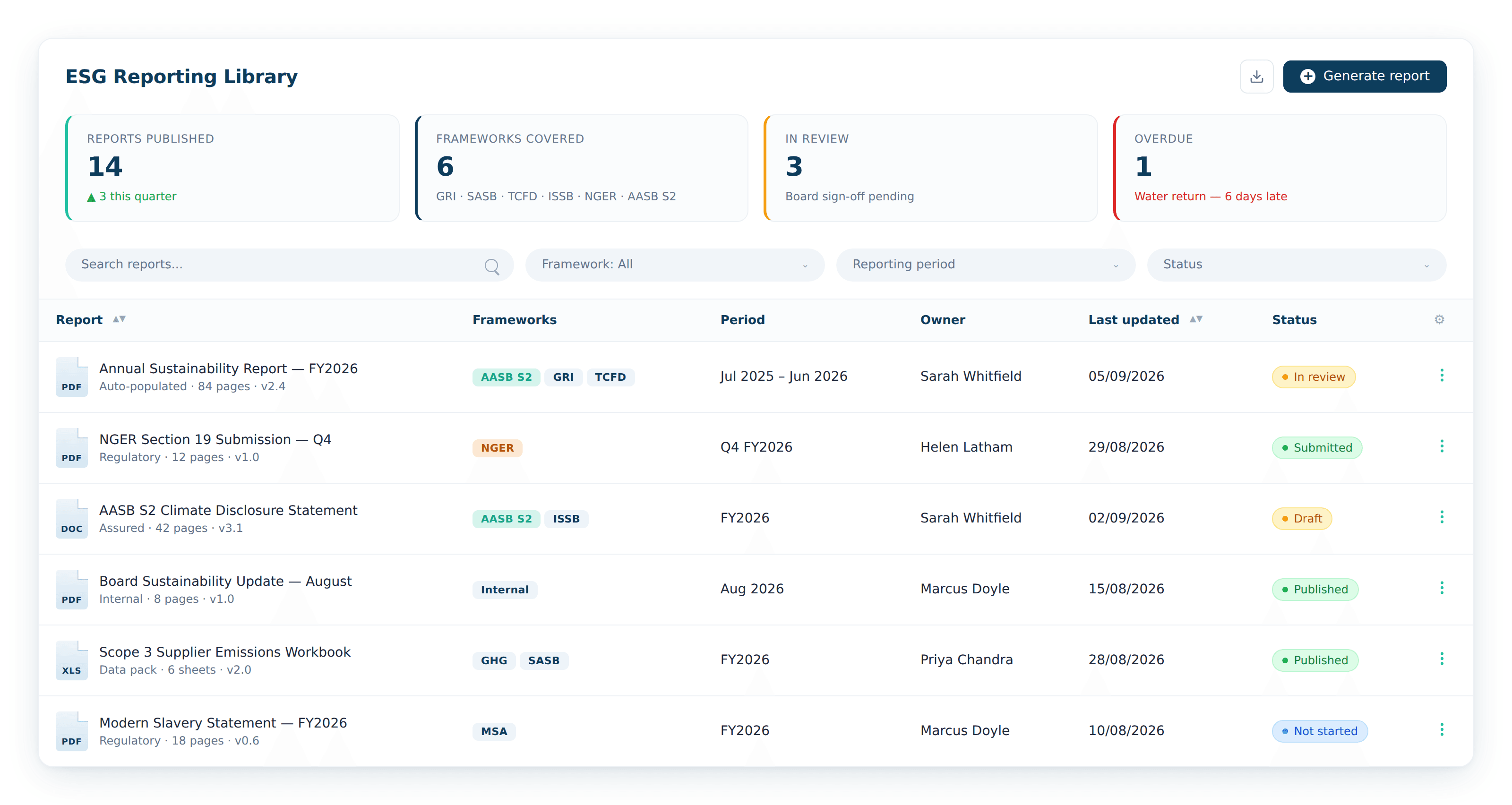
AASB S2 Reporting Software
What is AASB S2 Reporting Software?
AASB S2 software helps Australian businesses collect and report climate-related data in line with ASRS and AASB S2 disclosure requirements. SustainaPass provides an audit-ready platform to centrally manage emissions data, climate risks, stakeholder information, and compliance obligations. Replacing disconnected spreadsheets, teams can consolidate ESG information and maintain clear reporting records. The platform supports sustainability and finance teams needing to prepare climate disclosures, respond to customer ESG questionnaires, and demonstrate compliance during audits and procurement. By unifying ESG data, workflows, and compliance evidence, SustainaPass improves reporting accuracy, reduces manual administration, and builds strong AASB S2 readiness.
Common Use Cases
- Preparing AASB S2 and ASRS climate disclosures
- Managing emissions and sustainability evidence
- Supporting supplier ESG assessments
- Improving audit readiness and governance reporting
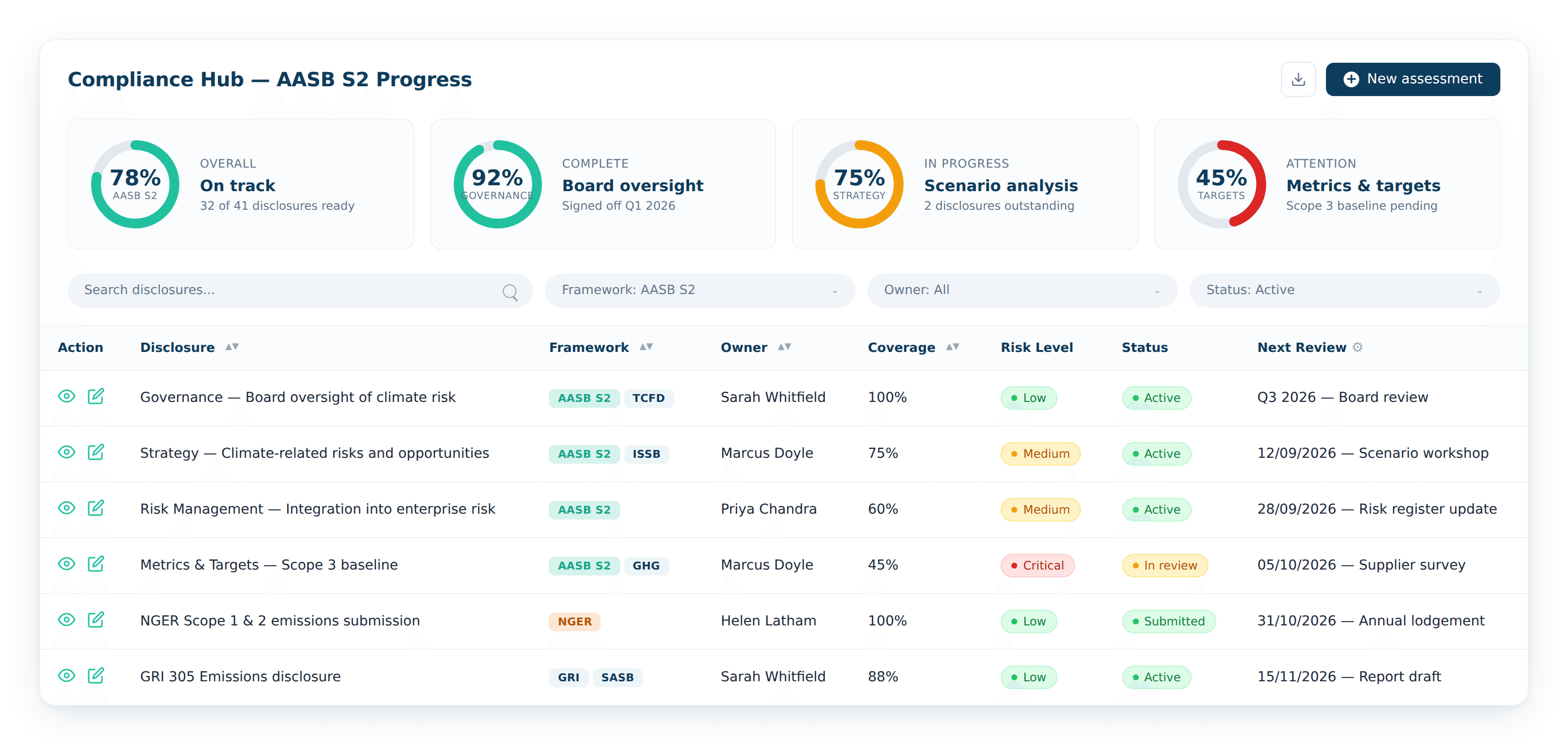
AI-Assisted AASB S2 Compliance
What is AI-assisted AASB S2 compliance software?
AI-assisted software automatically maps documents against AASB S2 obligations across Governance, Strategy, Risk Management, and Metrics & Targets. SustainaPass uses a deterministic pipeline before AI classifies evidence, returning fully traceable, sourced explanations for auditors and boards. The platform helps sustainability and compliance teams quickly understand their position, prioritise remediation, and produce reports without consultants. Automating gap analysis reduces assessment time to minutes, eliminating manual reviews and automatically generating clear risk remediation records. Ideal for Group 3 companies
Common Use Cases
- Assessing AASB S2 evidence coverage across all 25 obligations
- Identifying and prioritising compliance gaps before reporting deadlines
- Generating audit-ready compliance reports with source citations
- Replacing consultant-led gap analysis with continuous automated assessment
- Asking plain-English questions about current compliance position and evidence
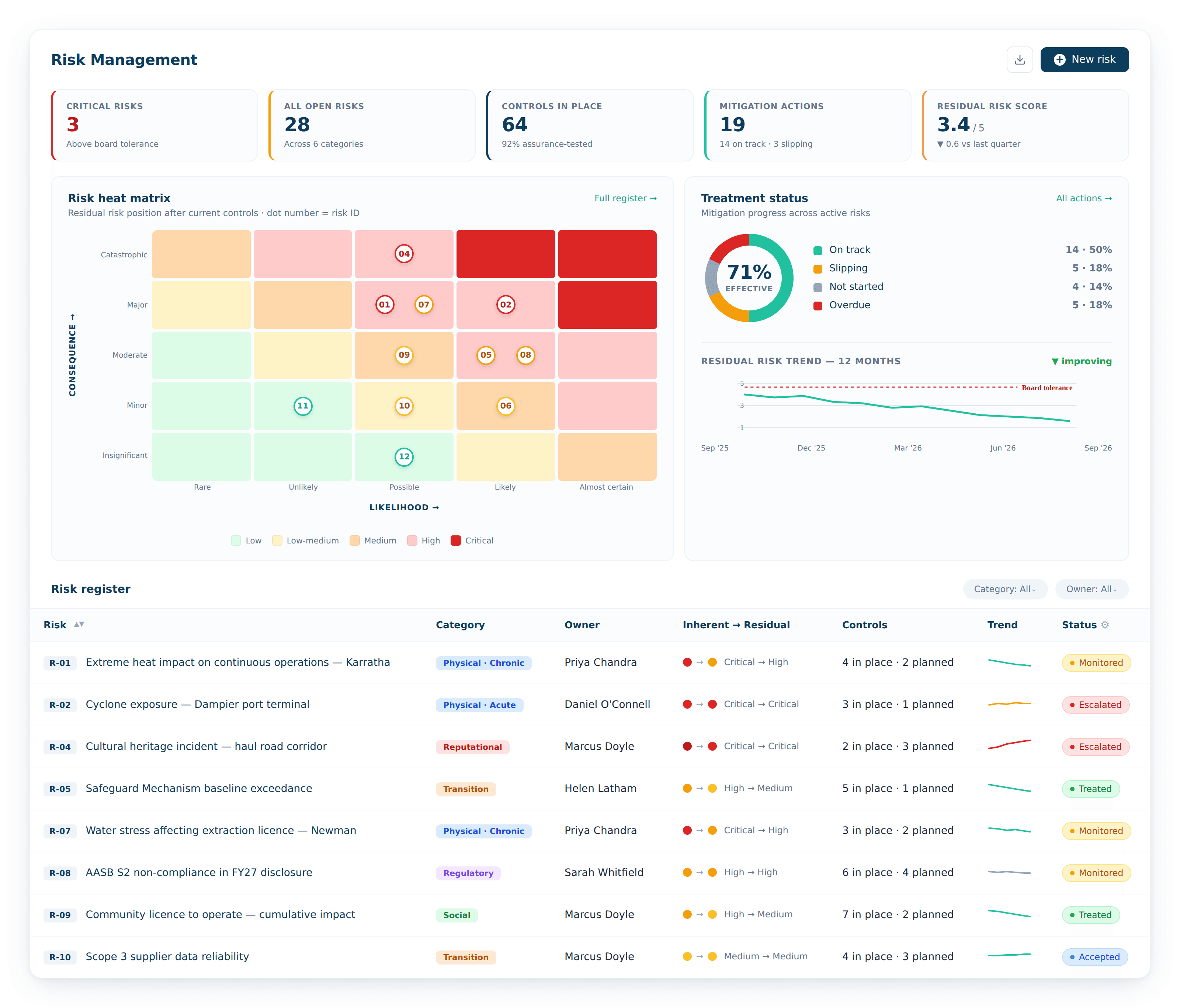
Manage ESG risks
How does SustainaPass help Australian businesses manage ESG risks?
ESG risk management involves identifying and responding to environmental, social, and governance risks impacting business performance and compliance. SustainaPass features a centralised register to record risks, assign ownership, and track climate or supply chain issues within one framework. Risk data links directly to actions and supporting evidence, creating a complete audit trail for governance reviews and reporting. This structured approach moves beyond spreadsheets to manage ESG risks effectively, supporting AASB S2 readiness and internal decision-making.
Common Use Cases
- Climate risk assessment
- Supplier ESG risk reviews
- Board and governance reporting
- Compliance monitoring and assurance
Obligations Management
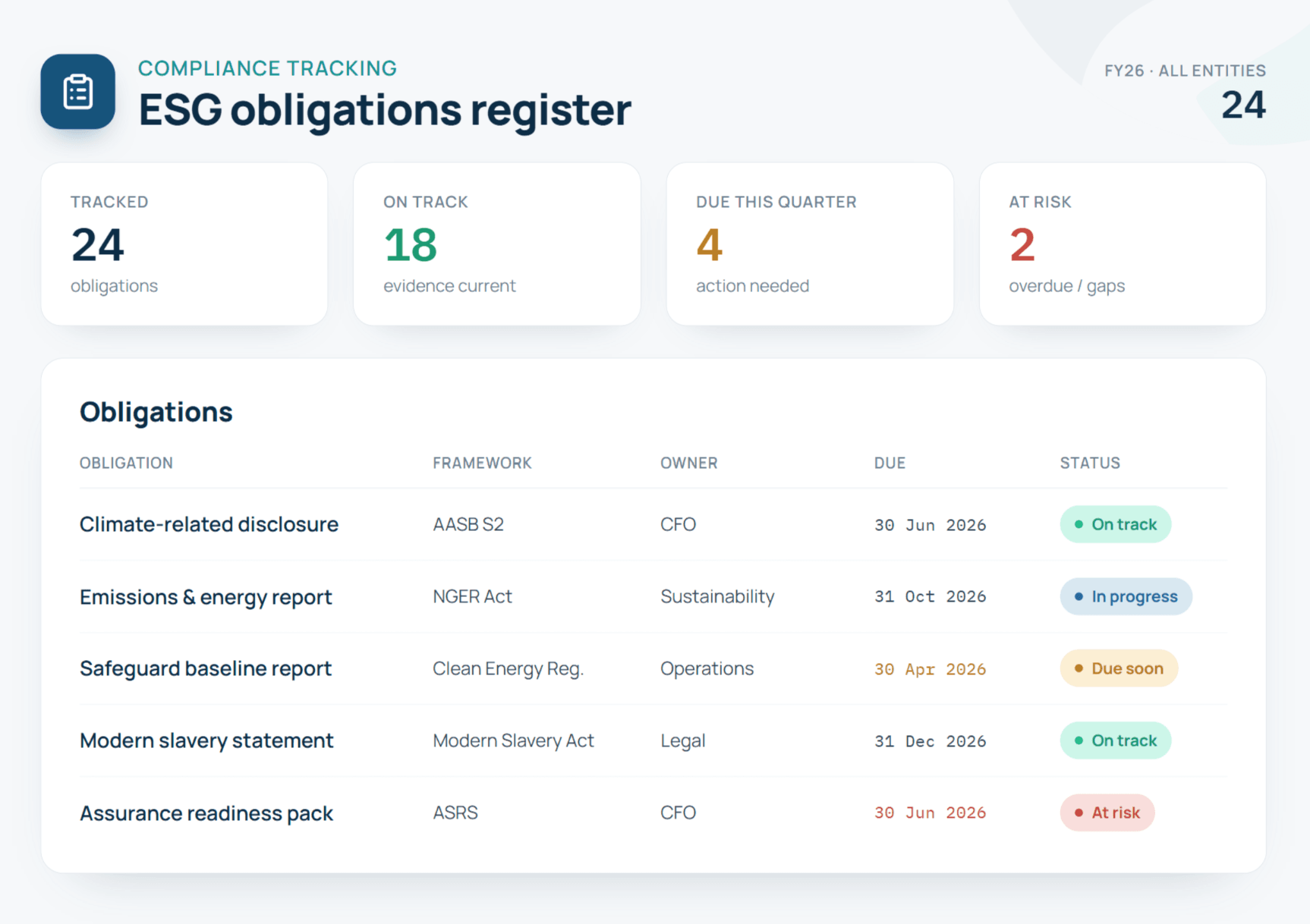
What Is an ESG Obligations Register?
An obligations register helps organisations identify, track, and manage regulatory, contractual, and internal ESG requirements. SustainaPass centralises environmental, social, governance, and sustainability obligations in a single system. Businesses can assign ownership, set review dates, monitor compliance status, and maintain evidence demonstrating fulfilment of obligations. This helps reduce compliance risk, improve governance oversight, and support audit readiness across multiple sites, business units, and operational activities.
Common Use Cases
- Regulatory compliance tracking
- Contract compliance
- ESG governance programs
- Audit preparation
Smart Forms
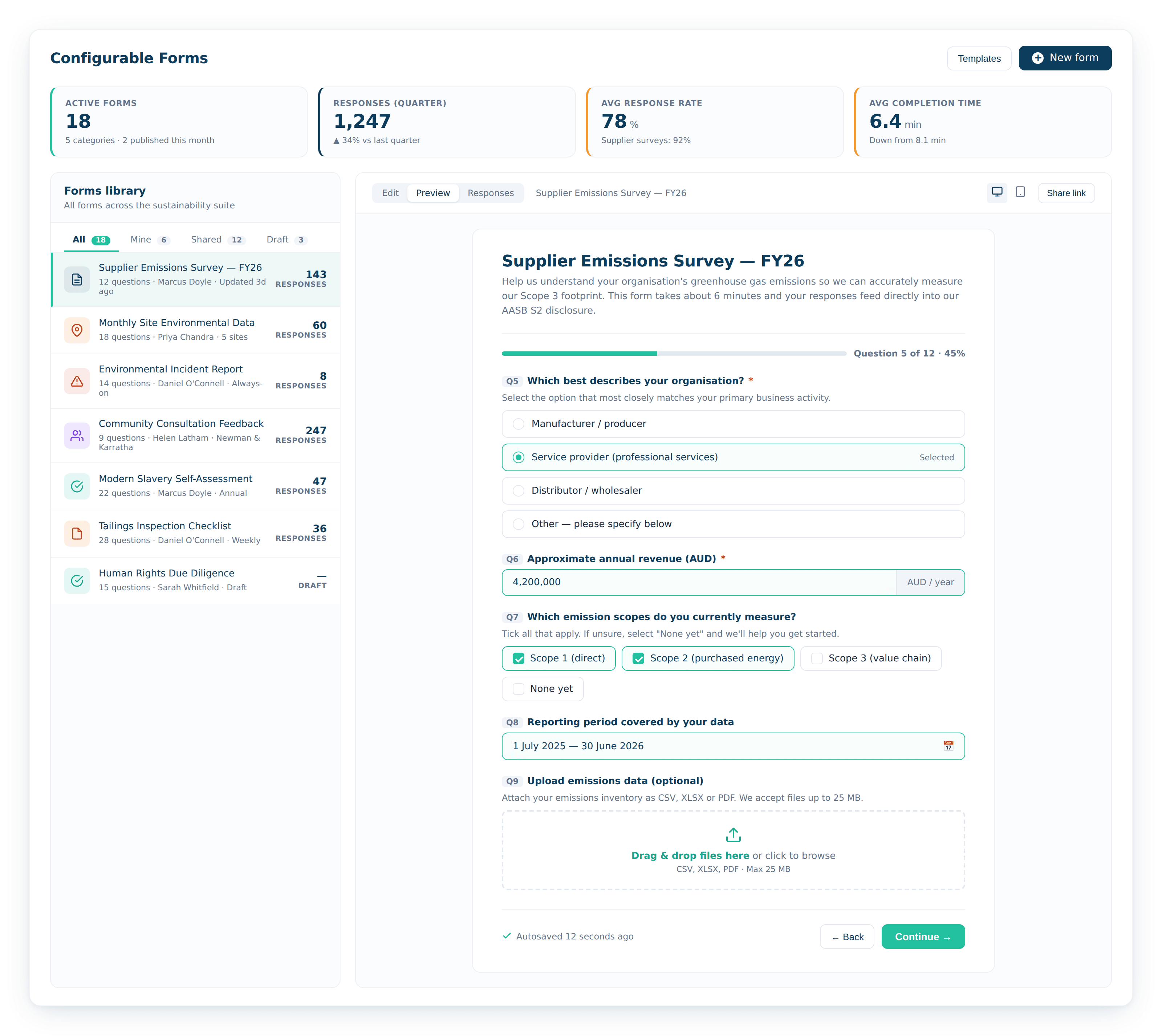
How Can Businesses Capture ESG Data in the Field?
SustainaPass Smart Forms allow organisations to digitise ESG-related forms and collect information directly from operational teams. Forms can be used to record inspections, environmental observations, stakeholder interactions, incidents, supplier assessments, compliance checks, and sustainability activities. Data entered through forms is automatically stored within the platform and becomes available for reporting and analysis. This reduces manual paperwork, improves data consistency, and creates a reliable source of ESG evidence.
Common Use Cases
- Site inspections
- Environmental observations
- Supplier assessments
- Compliance verification
Actions Management
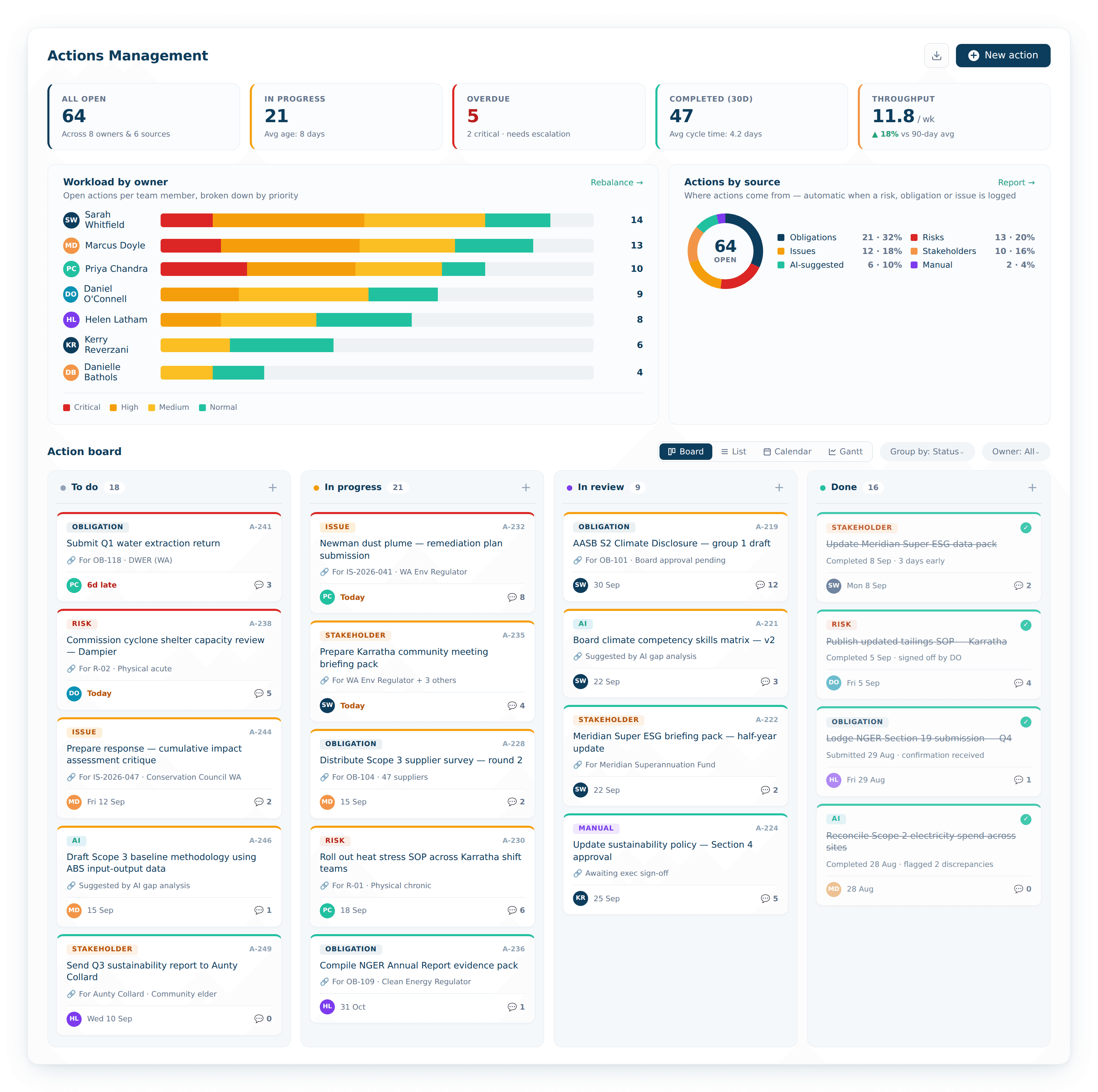
How Do Organisations Track ESG Actions and Improvements?
SustainaPass enables teams to assign, monitor, and manage ESG-related actions across the organisation. Actions can be linked to risks, audits, stakeholder commitments, compliance obligations, incidents, and reporting activities. Managers can assign responsibility, set deadlines, track completion status, and maintain evidence demonstrating progress. This helps organisations improve accountability, close compliance gaps faster, and maintain continuous improvement across ESG programs.
Common Use Cases
- Corrective actions
- Audit findings
- Risk mitigation plans
- Sustainability initiatives
Australian businesses are increasingly required to manage ESG and sustainability as part of normal operations. Learn more about ESG & sustainability for Australian businesses.